

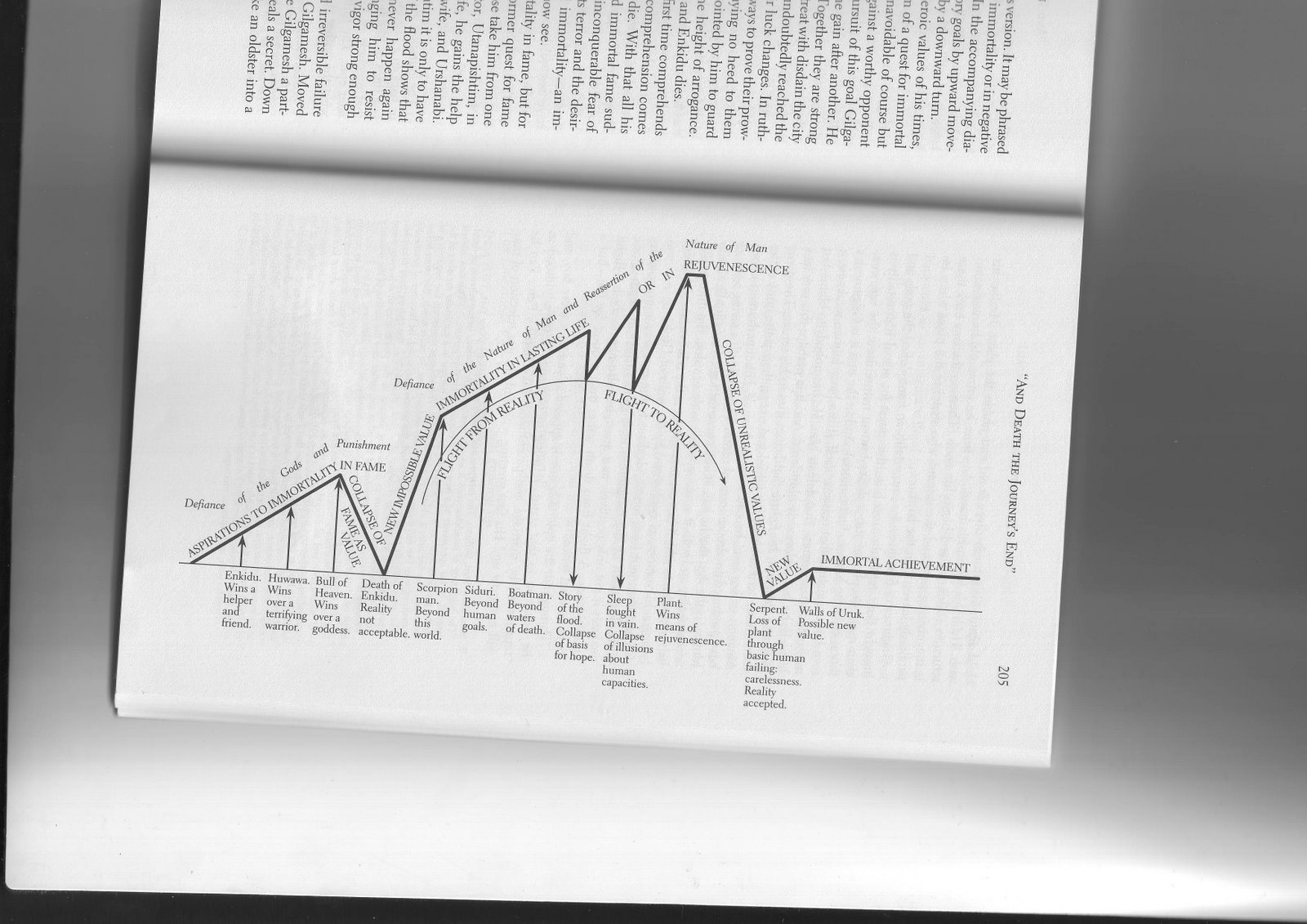
Gilgamesh Outline:
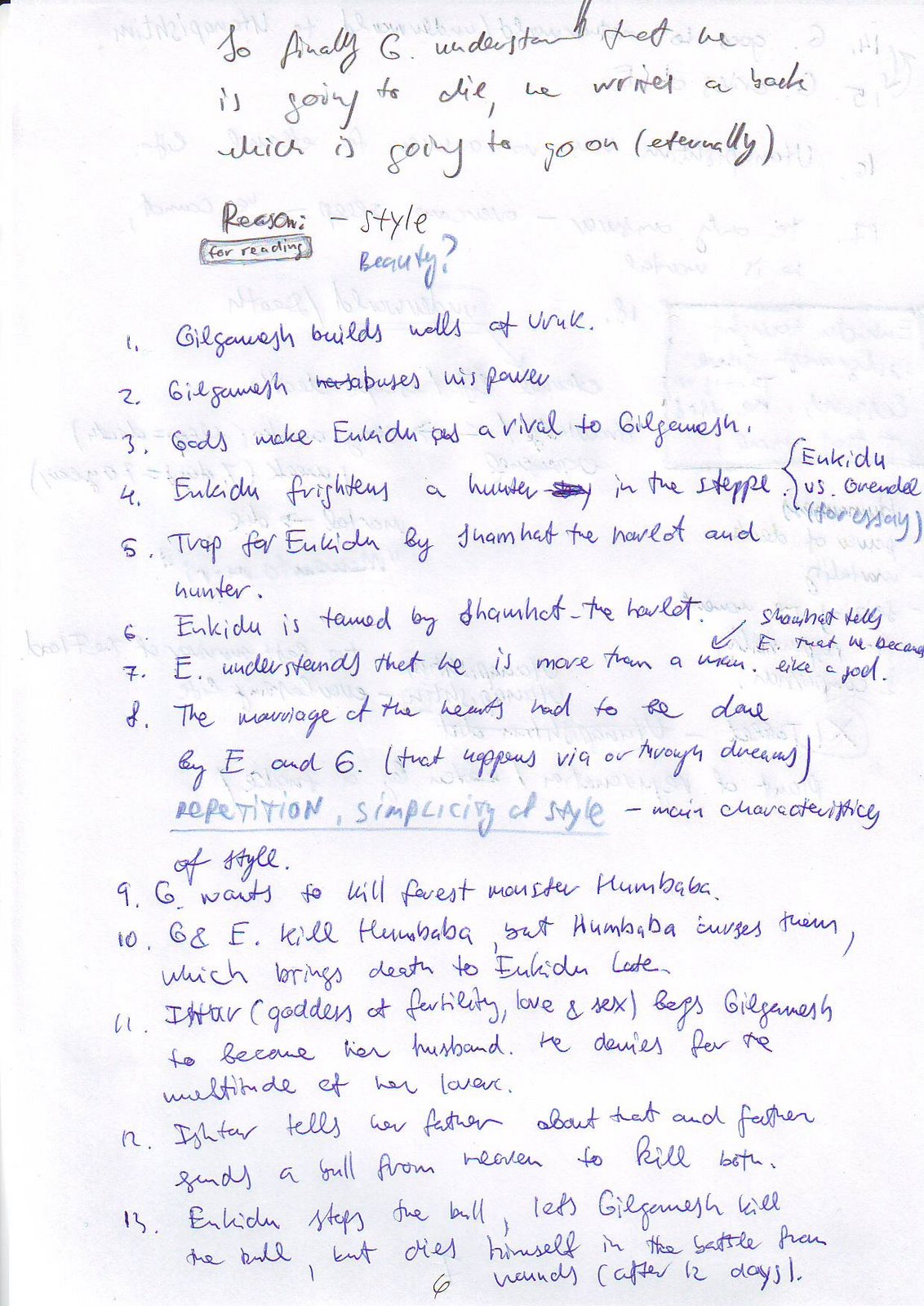
1. Gilgamesh is the son of goddess and man. (2/3 – god, 1/3 – human)
2. Gilgamesh abuses his power.
3. Gods make an equal for Gilgamesh – Enkidu.
4. Enkidu frightens a hunter in the steppe.
5. Gilgamesh puts a sensual trap for Enkidu sending Shamhat the temple priestess/prostitute to catch Enkidu.
6. Enkidu is tamed by Shamhat.
7. Enkidu understands that he is more than a man. Shamhat tells him that he is like a god.
8. The marriage of the hearts had to be done between Enkidu and Gilgamesh. (that happens thrpough dreams)
9. Gilgamesh wants to kill forest monster Humbaba (Humwawa) Help of Enkidu. A three plied rope is not easily broken. (cf. Eccl.4:12) Similarity of Humbaba and Goliath and Goliath’s curses. Curse of Humbaba before death. Similarly in other greek epics we see curses do take place: Aeneus is cursed by Dido. Cassandra in Aeschyllus’s “Agamemnon” is cursed in giving prophecies but nobody will believe her. Cyclops curses Odysseus to lose all his men.
10. Ishtar (goddess of fertility, love and sex) tries to seduce Gilgamesh to become her husband. Offers blessings if Gilgamesh agrees. He reminds her of her cruelty with her former lovers.
11. Ishtar complains to her father and that in his turn sends a bull from heaven to kill Gilgamesh.
12. Enkidu stops the bull, lets Gilgamesh kill the bull, but is mortally wounded in the battle.
13. Enkidu is sad on his deathbed. He first curses Shamhat, but after receiving correction form gods blesses her. In 12 days Enkidu dies.
14. Gilgamesh cries over his dead friend. “May the path that led you to the Cedar forest mourn you constantly…”
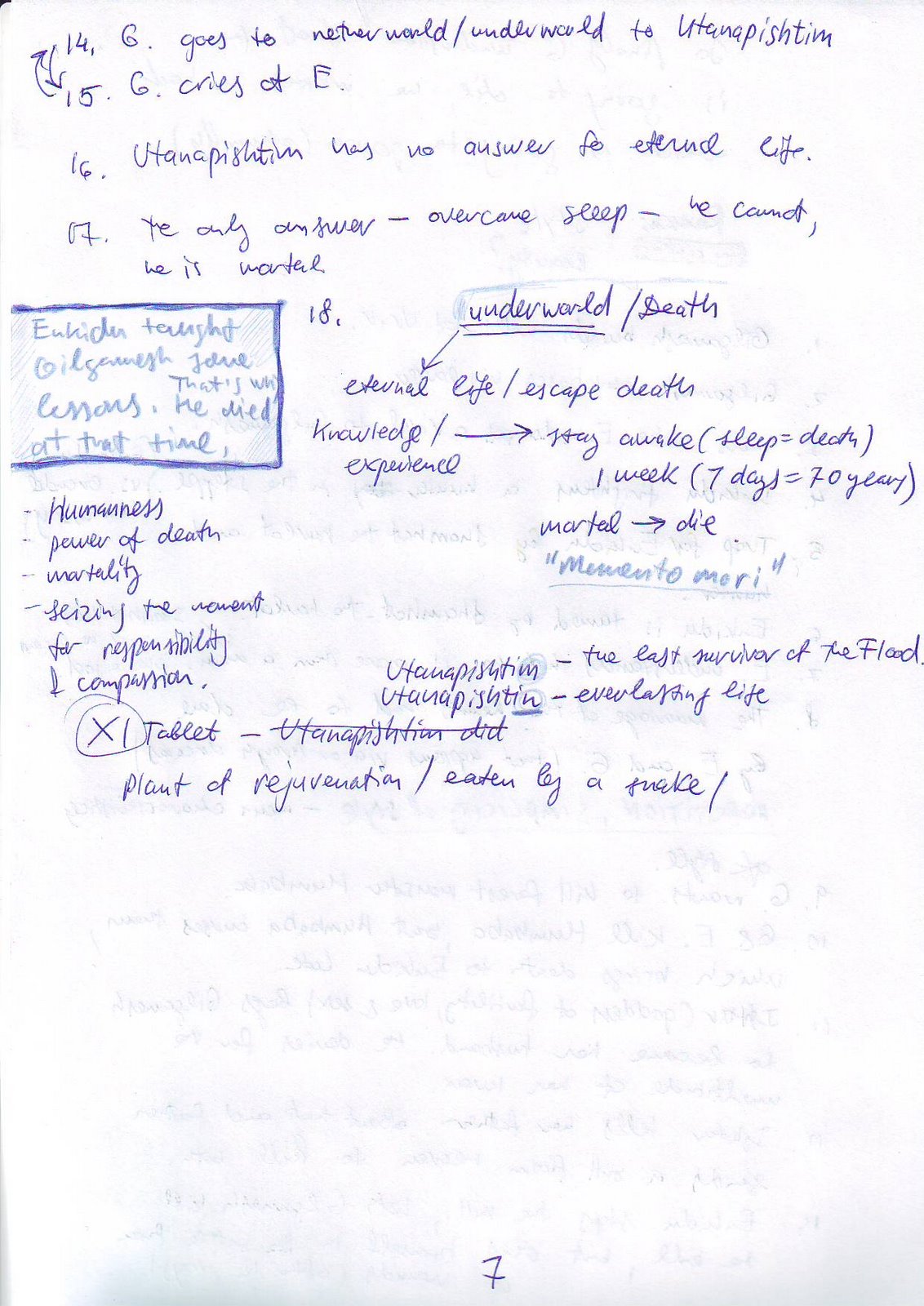
15. Gilgamesh goes to the Underworld to Utanapishtim (the last survivor of the flood) (similar things: river, ferryman)
”Deep was the darkness with no light at all before and behind him and to either side…”
“My beloved friend has turned into clay, my beloved Enkidu has turned into clay…” Gilgamesh is afraid that he will lie down as Enkidu to never rise again. Siduri’s “consolation”:
“When the gods created human life they also created death and the held back eternal life for themselves alone. Humans are born, they live and then they die. This is the order that gods have decreed. But until the end comes enjoy your life, spend it in happiness not in dispair…”
“Uncrossable ocean”. Urshinavi – Utanapishtim’s boatman, who can help G. 300 poles to sail and not touch the deadly water.
16. Utanapishtim has no answer for eternal life. Utanapishtim tells him a very blurred story of the deluge. 6 decks vs. 3 decks of Noah’s Ark. There Gilgamesh is reminded of his mortal third. From the story of the Flood. Enlil’s speech: “Is it right to punish the sinner for his sins? to punish the criminal for his crime? But be merciful, do not let people to die because of sins of some. Instead of Flood you should send lions do decimate the human race, or wolves, or famine, or a deadly plague…” That is said in the council of gods, because even gods were afraid of the flood.” Utanapishtim heard the plans of gods and was granted the permission for eternal life and dwelling at the source of the river. Utanapishtim doubts if gods will grant the same permission to Gilgamesh. But there is a test possible.
17. Test 1: overcome sleep for 7 days (type of death) Gilgamesh fails that test.
18. Last opportunity: rejuvenation plant.
19. Plant is eaten by the snake. All hope is lost. Sleep and carelessness of G.
20. Building walls of Uruk – the only way to immortalize achievement.
Major themes: rulers and others are created by gods for different purposes, immortality, brotherly love, fear of death,
Words used in the scheme: rejuvenescence, immortal achevement, fame, pride, fall, power abuse, Underworld, mortality, friendship, will of gods vs. man’s will. Utanapishtim (survivor of the flood) and Utanapishtin (eternal life reserved for gods). Tavern keeper Saduri basically advises Gilgamesh something similar as king Solomon adviced in the book of Ecclesiastes:
“Wherefore I perceive that there is nothing better, than that a man should rejoice in his own works; for that is his portion: for who shall bring him to see what shall be after him?” (Ec.3:22)
Multiple repetitions: cheeks of Gilgamesh, horrors of Humbaba –